Vrooom! Brand identity and strategy // Experience, product, and visual design // UX // Art direction // Typography // Merch, OOH, retail // Campaigns // More
Mazda MX-30:
Humanising the Electric Revolution
Launched Mazda’s first electric vehicle, repositioning the brand in the premium segment through accessible, human stories across 30 countries and 26 languages.
The European EV market was dominated by brands with long-standing electric credentials, creating a technically complex and crowded space. Mazda faced skepticism regarding their EV expertise, coupled with highly fragmented consumer attitudes across Europe.
Context


The goal was to introduce the MX-30 in a way that built trust and adoption without relying on the typical spec-heavy or hype-driven messaging used by competitors.
Additionally, Mazda as a brand was not as well-known in Europe, and that due to Covid-19 (the car was announced in 2020), people were critical of their purchases.
The campaign, “Life Specs”, puts a spin on how technical specs are perceived by making it more whimsical, e.g. “Top Speed: 140 miles per hour”, becomes “Top Speed: 140 smiles per hour”; or “Energy: Battery for up to 4 days” turns into “Energy: Battery for busy days”. Three aspects were crucial for me: authenticity and relatability, bespoke, and sustainability (quality or product materials).
Challenge


Mainstream buyers were overwhelmed by EV complexity; I realised that technical superiority doesn't drive conversion—human relatability does.
Pivot to Usability: I positioned the vehicle around everyday usability and thoughtful design rather than performance extremes.
Challenging Assumptions: Research showed that women represent 45% of EV purchasers, yet were often treated as a secondary audience.
Gender-Neutral Design: This data directly shaped the campaign to be gender-neutral across all global markets.
Strategy


Multichannel Launch: Concept-through-execution for digital, film, OOH, and photography adapted for 26 languages.
Brand Governance: Increased local relevance across three distinct launch phases.
Research-/data-meets-campaigns: Parallel to pitching ideas, I did extensive consumer behaviour research to better understand, e.g.:
How Mazda as a brand vs. product is performing in the European market;
How different audiences perceive Mazda, e.g. consumers vs. journalists, dealers, and social media;
How EVs are perceived in Europe (both good and bad associations);
How consumers react to certain trends, design and technical topics, and how diverse these reactions are across different markets.
This research is used - to date - to inform the brand strategy in general but also for upcoming products. Some interesting findings include
women actually being common purchasers of EVs (45%) even though they are often placed as secondary target audiences
(a finding that largely influenced the campaign to be more gender-neutral than male-targeting), that emotional purchases (i.e. “direct reflection of one’s self”) have increased drastically since the 4th week of lockdowns in 2020, and that even though Mazda is not yet well-known in Europe, those who actually own said cars are very strong brand ambassadors within their social circles.
What I did


Brand: Premium repositioning of Mazda.
Sales Success: 12,419 units sold in the first year.
Category Entry: Successfully established Mazda in the EV category and repositioned them as a premium player.
Global Consistency: Delivered a unified brand experience across all touchpoints and cultures.
The campaign was done together with VLMY&R and director Daniel Börjesson.
Outcome


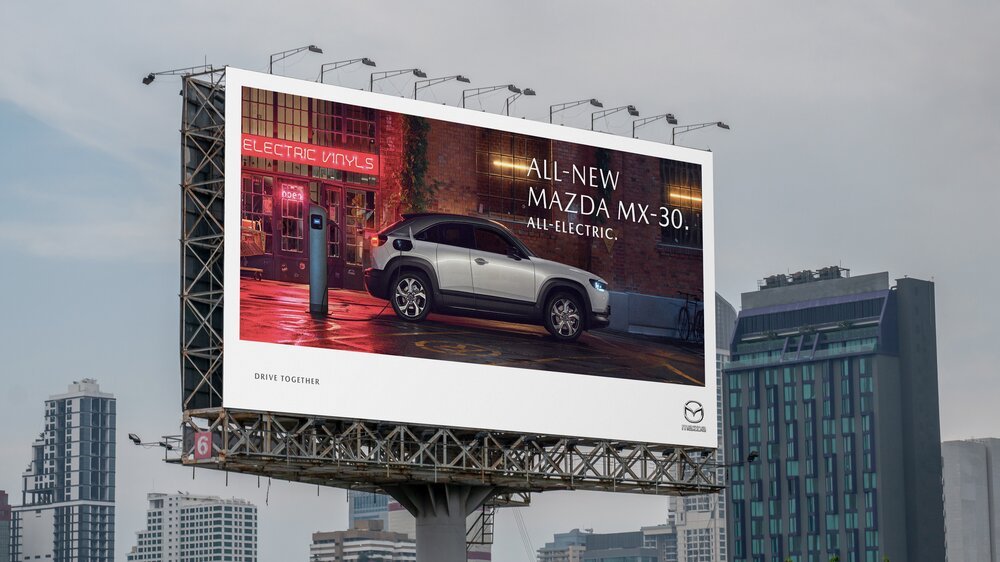


Credits to VLMY&R Vienna and Daniel Börjesson and the Mazda team.
>> Learn more about the PRODUCT FROM THE MAZDA PAGE. <<
Tags: Brand identity and strategy // Brand governance // Experience design // UI/UX // Visual design // Product design // Campaigns // Art direction // Photography // Performance Marketing // MORE
